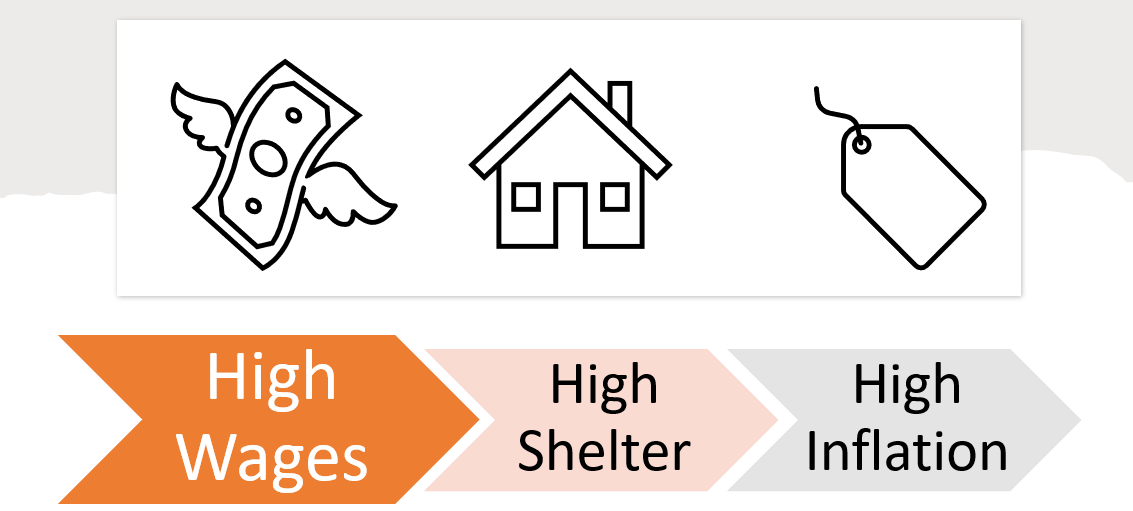
Federal Open Market Committee’s meeting minutes (July 30–31, 2024) show that the Fed’s staff see the Labor Market as rebalancing instead of weakening (read US labor market is neither shrinking nor expanding, and US Labor Market may be Correcting High Compensations from “Great Resignation”). In fact, the staff understand that current inflationary pressures, stemming from the Shelter Index, are closely correlated to wages and salaries. The fact that inflation is currently above the Fed’s target is largely explained, in their view, by the sluggish effect of monetary policy over wages and compensation, which in turn must put pressure on the Shelter Index to decrease. Furthermore, the Fed believes that the Shelter Index takes longer to adjust than other prices given the rigidity of renewals in rent contracts, which are mostly set on an annual basis.
Therefore, the Fed’s current expectation is that as the labor market eases, so will the Shelter Index, enabling the inflation path toward the two percent target, and thereby incentivizing hiring as compensation costs curb down. The current narrative may be leading Fed’s analysts to think that the way forward to growth is via a more “affordable” labor market on the firm side. In their words,
“Participants observed that other indicators also pointed to easing in labor market conditions, including a lower hiring rate and a downtrend in job vacancies since the beginning of the year. Participants noted that the rebalancing of labor market conditions over the past year was also aided by an expansion of the supply of workers, reflecting increases in the labor force participation rate among individuals aged 25 to 54 and a strong pace of immigration. Participants noted that, with continued rebalancing of labor market conditions, nominal wage growth had continued to moderate. Many participants cited reports from District contacts that supported the view that labor market conditions had been easing. In particular, contacts reported that they had been experiencing less difficulty in hiring and retaining workers and that they saw limited wage pressures”

The staff’s assumptions on the US economy largely depend on leading indicators such as New Unemployment Insurance Claims. The confidence in the narrative erodes if at any point during the intermeeting period Unemployment Insurance Claims jump unexpectedly. In Econometricus’ calculations, an unexpected jump in claims would be if any of the Department of Labor’s reported numbers is higher than 242,722 during the intermeeting period. So far, no outsized number in claims has been reported or revised (read [Econometricus Nowcast] New Unemployment Insurance Claims Still on the Lower Side).

Book an Appointment with Econometricus to see how we can support you


Categories: Macroeconomics


 Econometricus.co
1 reply »