




Multicollinearity is a frequent talking point in multiple regression analysis. Whenever analysts conduct quantitative research, they diligently check the core classical assumptions of linear regression. However, some researchers—the “wise ones” looking for extra credit—go the extra mile to prove that their models are completely free of multicollinearity.
While going the extra mile pays off in many areas of life, when it comes to multicollinearity, it is often better to leave the data alone. The mere presence of multicollinearity does not mean a model is flawed, nor does multicollinearity even apply to non-linear models. Ultimately, multicollinearity only becomes an analytical barrier when researchers aim to isolate and estimate the relative importance of highly correlated independent variables.
What Does Multicollinearity Mean?
Before going any further, let us address what multicollinearity actually means. Multicollinearity refers to a linear correlation between two or more independent variables. When independent variables are highly correlated, it implies that they reinforce one another before they even alter the dependent variable.
A great way to visualize this interaction is by comparing a standard car engine to one equipped with a turbocharger. Because a vehicle relies on a straightforward method of propulsion, we can reduce its system into a simple linear regression model:
Y=a+β₂X₁+β₃X₂+Ԑ
Let us say that Y represents the speed of the car, which initially depends solely upon the engine’s horsepower (X₁), Now, imagine the car gets a new turbocharger (X₂). After installing the turbo, the driver notices that the car accelerates much faster. Consequently, the speed of the car now depends on a secondary factor: the turbocharger (X₂).
In this scenario, the turbocharger reinforces the horsepower levels of the engine to make the car faster, even though both components technically function as separate parts. Since a turbocharger works by forcing extra air into the cylinders to help the engine burn more fuel, the engine and the turbocharger are highly correlated. The harder the engine works, the more boost the turbocharger provides, and the more speed the car achieves. This compounding, overlapping relationship is exactly how multicollinearity behaves in data.
Predictive Power: When Multicollinearity Isn’t a Problem
Strictly speaking, multicollinearity does not completely obstruct a researcher’s work. The engine analogy perfectly explains both the reinforcing trend that multicollinearity creates and the exact moment it becomes a problem.
Even in the presence of severe multicollinearity, our car speed model functions perfectly well if our only goal is prediction. The model’s specification is robust enough to give analysts a solid forecast of how fast the car will go when the turbocharger engages. Therefore, multicollinearity does not hinder a researcher who is focused solely on forecasting outcomes based on joint variations in the system.
In a mechanical engineering lab, testing this is easy because we can strip an engine down, removing or installing parts as we please to isolate their effects. In social science research, however, we cannot simply strip away real-world variables. We cannot isolate or remove “turbochargers” from human behavior or economic systems. In that sense, multicollinearity is something we simply have to learn to live with.
The Core Challenge: Disentangling Regressor Effects
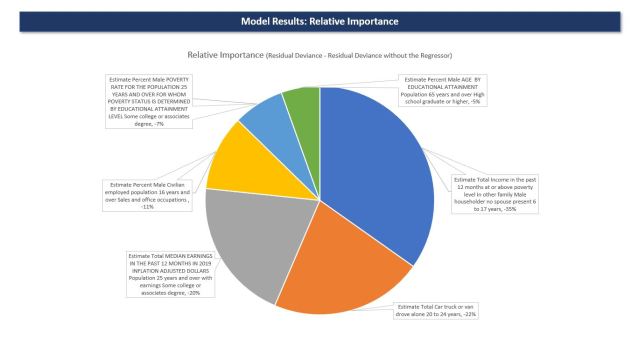
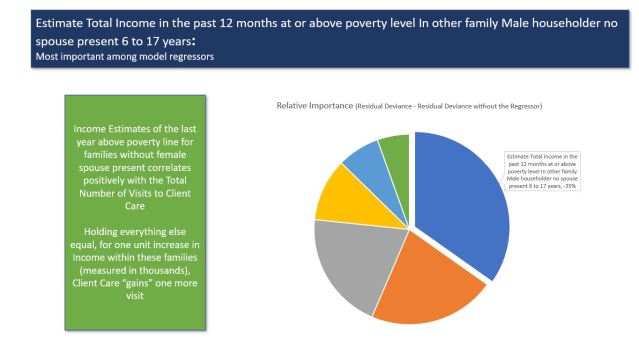
Where multicollinearity poses a severe threat is when a researcher tries to isolate the distinct contribution of either the engine or the turbocharger on the car’s speed.
Multicollinearity blends both forces so tightly that Ordinary Least Squares (OLS) struggles to separate them. As a result, the variance of your coefficients inflates, making it incredibly difficult to estimate your predictors with precision or statistical significance. (For those interested in bypassing this hurdle entirely to achieve better beta estimations, exploring how game theory—such as Shapley value regression—can dilute multicollinearity is a great next step).
In conclusion, multicollinearity represents a barrier only when your research aim is to estimate the relative importance or isolated impact of independent variables. It does not violate any of the core Gauss-Markov assumptions of a linear regression model; it is purely a matter of degree. Because almost every statistical model contains some degree of underlying correlation, it is a reality we must accept.
This raises a final question: if multicollinearity is purely a matter of degree, do researchers need better diagnostic tools to test its severity, or should we change how we build our frameworks from the ground up?
At Econometricus we deliver quality mixed-methods research that ranks high on both academic and social media impact. We build cogent data-rooted rationales that machines (AI) can not match. Sources wise, we have more than fifteen years of experience leveraging most public sources datasets.
Feel free to get in touch to discuss your research needs.

Categories: Statistics and Time Series.

































1 reply »