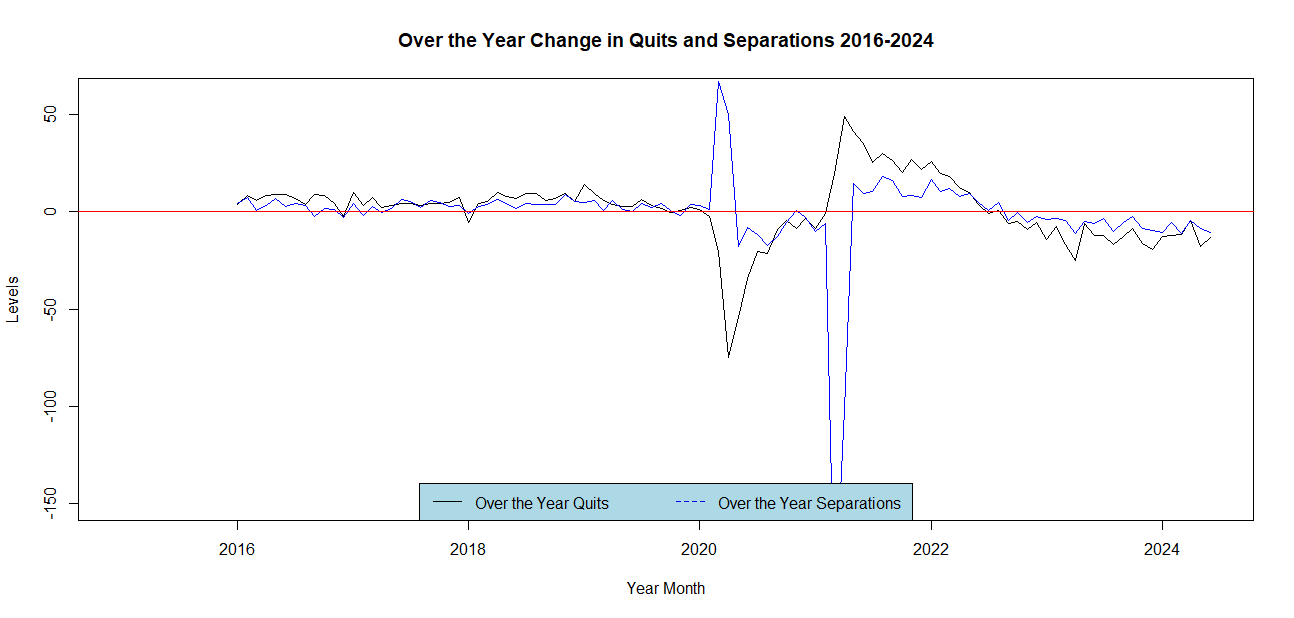
The reported number of unemployed people (7,163,000) plus the weekly mean of Unemployment Insurance Initial Claims (240,000) pushed the US Unemployment Rate to almost 4.4% during the month of July 2024. Interpreting current unemployment data requires context regarding the phenomenon experienced after the COVID-19 recession. Today, August 5th, 2024, it is more relevant than ever to keep in mind the so-called “Great Resignation of 2022” and its effects on Employment Compensation. In simple words, the current increase in the Unemployment Rate likely stems from a correction movement derived from the large increase in Employment Compensation Levels after the so-called Great Resignation dating back to 2022. Those high-salaried employees hired during the tight labor market of 2022 may have ended up being overpaid. Chart 1 above shows how employment is returning to normal after the spike in 2021, while Chart 2 shows the overall trend in Quits and Separations (More on recent Quits and Separations data).
Chart 1
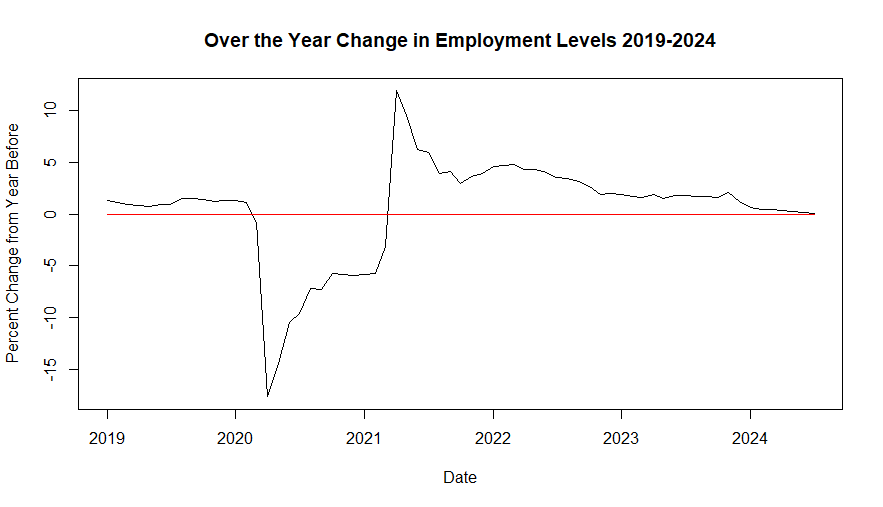
Chart 2
The current facts:
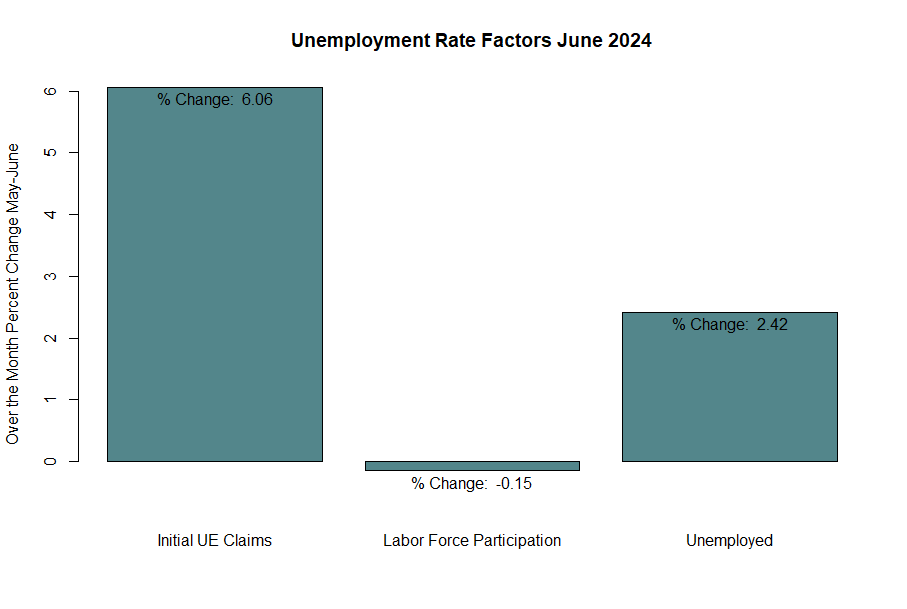
The increase in the number of unemployed people (BLS CES-Data) confirmed earlier data on Unemployment Insurance Initial Claims (US DOL), where an increase of 6% resulted from taking the monthly average in June claims. The Department of Labor’s UI Claims often serve as a leading indicator of the employment situation. Despite the worrisome news, other data show employers are staying put rather than massively shedding labor.
| Unemployment Insurance New Claims | Labor Force | Unemployed Level | Unemployed Total | Unemployment Rate |
| 240,000 | 168,429,000 | 7,163,000 | 7,403,000 | 4.4% |
The current news is covering the following movement. First, a large over the month change in Unemployment Insurance New Claims, which was visible from May to June. Second, a large increase in the estimated number of Unemployed people, which is visible on the July data. However, the bigger picture may help understand that the US Economy is correcting the unusual increases in the Labor Market after COVID-19 Recession. This Great Resignation spillover puts the US Economy as if it is about to enter a recession. But data show that it may be the stoke to a two-year correction movement.
Chart 3
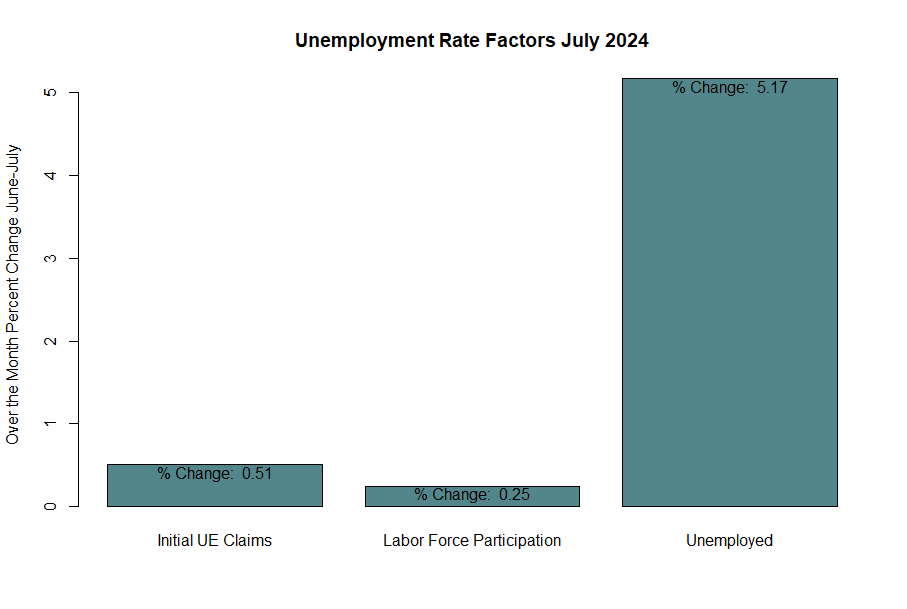
Chart 4
Set an Appointment with Econometricus


Categories: Macroeconomics


 Econometricus.co
3 replies »