The balance of risks of the Federal Reserve dual mandate remains on the price stabilization side (mostly from wage inflation). July’s uptick in the Unemployment Rate, along with the Unemployment Insurance Claims for the last week of July, led analysts to think (momentarily) that Unemployment was weakening beyond the necessary cooling of the tight labor market of 2023. Thus, fears on the labor market are dissipating with the latest data on both state-level Labor Participation Rates, as well as nation-level UI new claims. With GDP growth solid, concerns about prices are left on the table for analysts and monetary authorities to discuss.
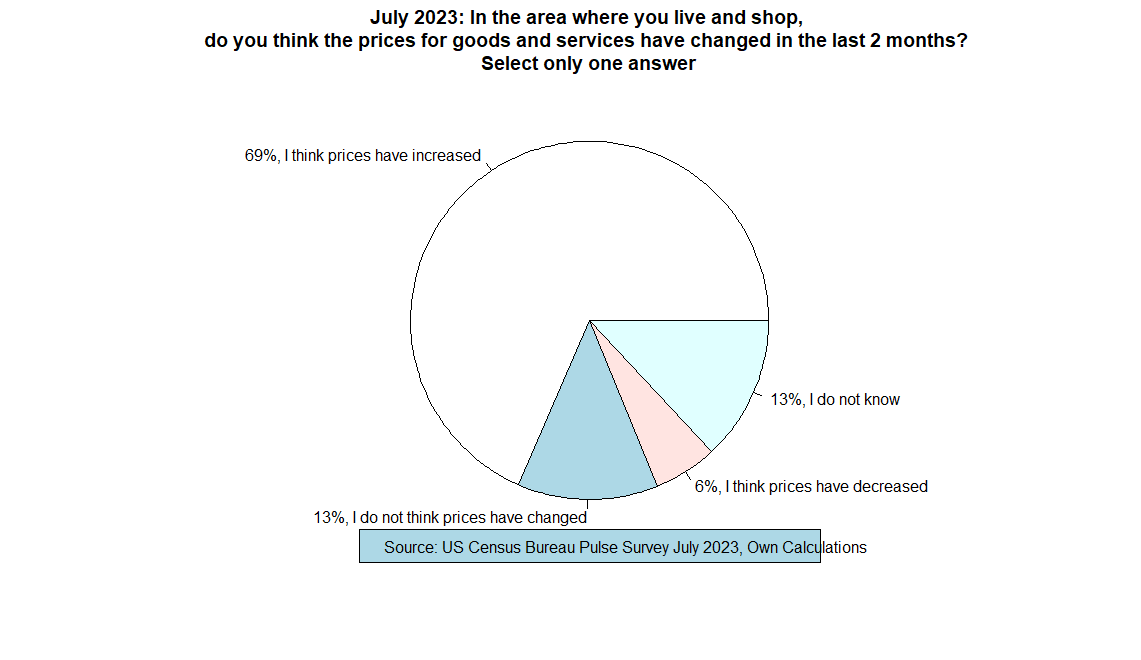
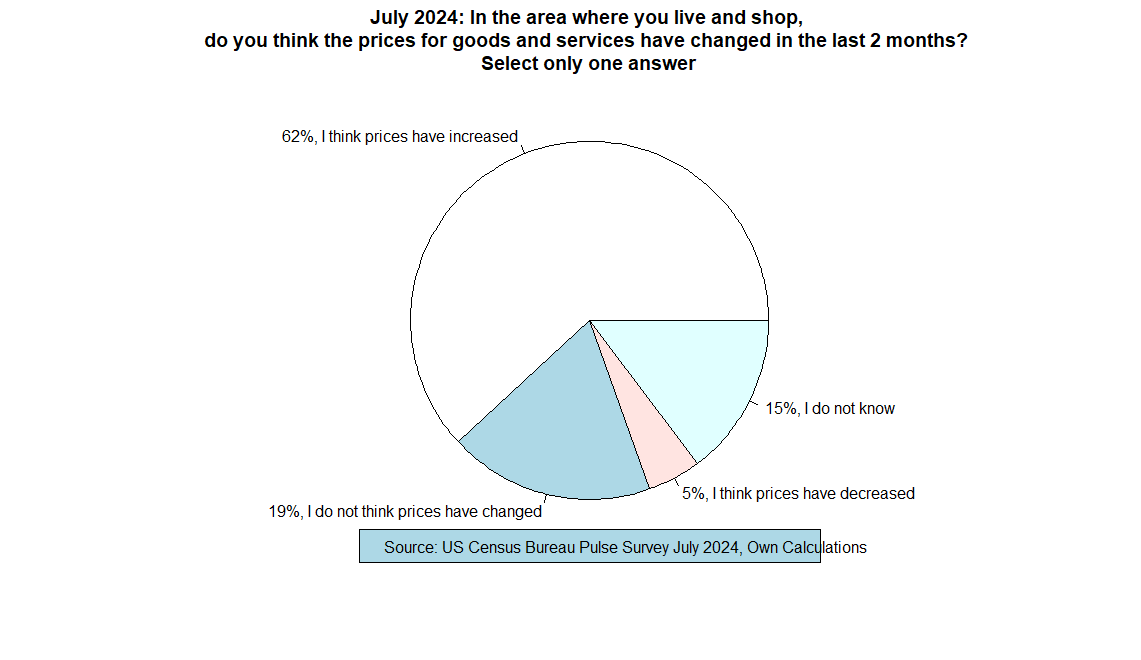
On the prices front for US Households, US Census Bureau Pulse Survey Data show that fewer people think prices have increased in 2024 compared to 2023, while there is only one percent fewer in the category “I think prices have decreased.” In other words, things have not gotten pricier, but are still pricey. Despite the perception that prices have decreased compared to summer 2023, the stickiness in prices is still being felt by American households. At first glance, the proportion of people thinking things are cheaper than a year ago does not seem to have changed significantly over the year.
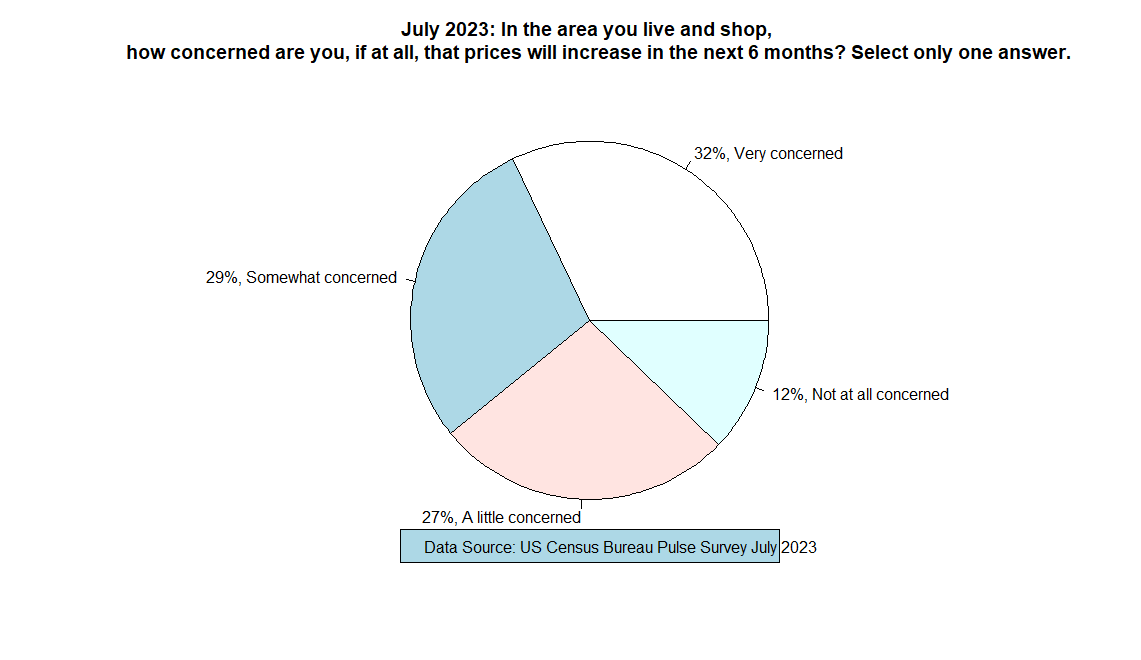
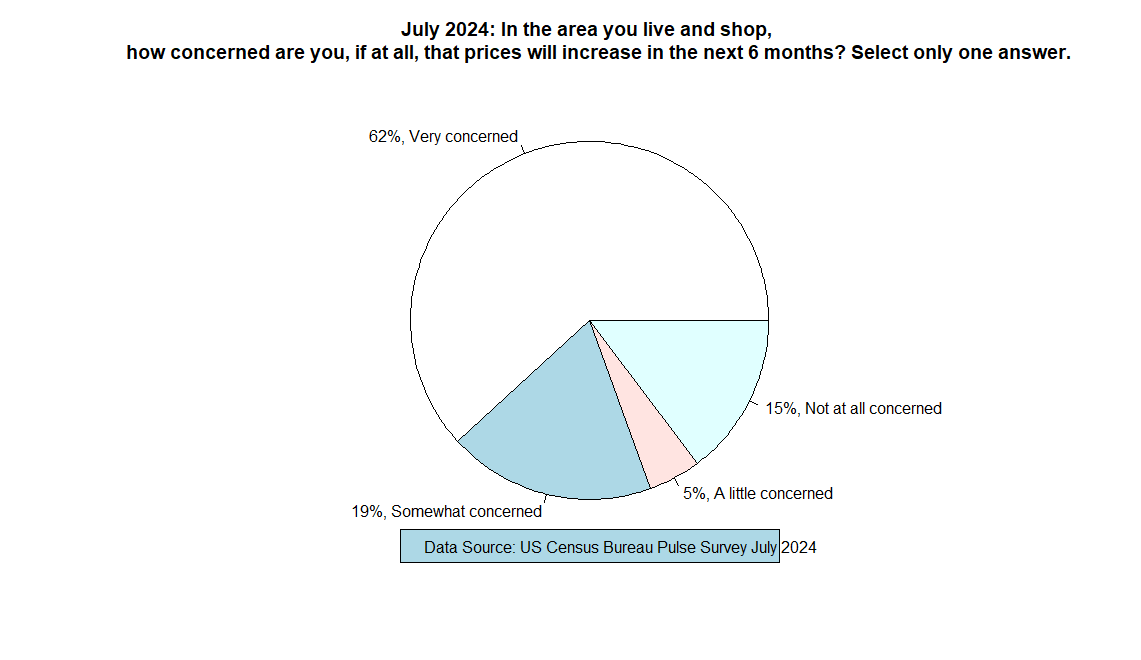
When asked about concerns that Inflation will rise in the next six months, 62% of surveyees responded “Very Concern” and 19% “Somewhat Concerned”. Although the question does not allow for direct inferences on Inflation Expectations on American Households, these percentages leaves some room for analysts to assess the current situation in the States. Monetary Policy Authorities claim that if inflation expectations are well “anchored”, it is reasonable to expect that the inflation target (2%) will be met. If the Pulse Survey works at all, Econometricus’ educated guess is that there are little expectations of price drops at least on the households’ side. That means, there is a lot of work to do on prices.
Pulse Survey data required raking for which Econometricus rebalanced the survey answers by leveraging the known distribution on Education Attainment. Sample weights were calculated and run on the responses accordingly.
Request the survey raked data for free, or request services. Make an appointment with Econometricus!


Categories: Macroeconomics


 Econometricus.co
1 reply »