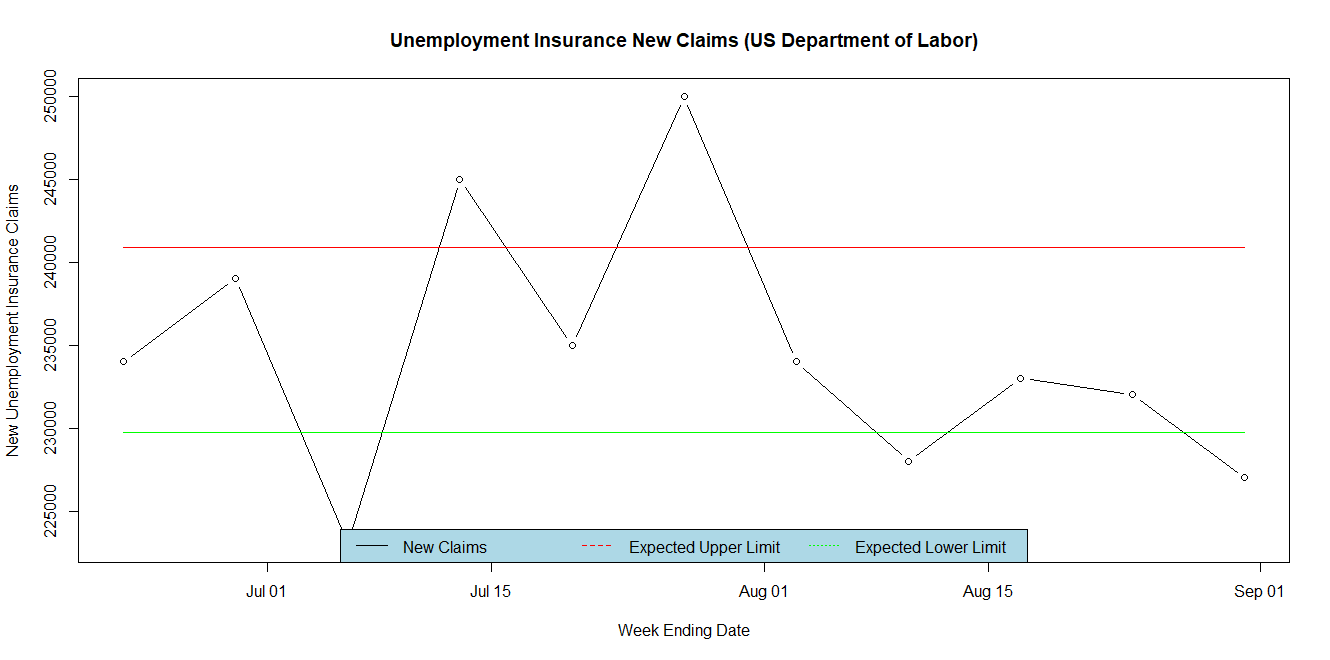
Now is the time for labor market analysts to turn to qualitative data insights. Survey data keeps pouring in, showing a resilient labor market that seems to be contradictorily weathering low expectations about the US economy. Although the market may not be booming at the precise end of the summer season, neither is it languishing. The week ending on August registered a preliminary number of 227,000 new unemployment insurance claims. The US Department of Labor’s reported number is significantly lower than its previous ten weeks running average of 234,545. Furthermore, data on separations corresponding to July’s unemployment rate hike did not stand out. By looking at survey data, the balance of risk of the Fed’s dual mandate has not changed at all, having a largest to-do list on the inflation side by further cooling the labor market.
Backing survey statistical data, such as the Unemployment Rate and Unemployment Insurance Claims, with anecdotal data helps us understand the current employment situation better. Thus, and despite the risk of politicizing the Monetary Policy debate, it is important to listen to the current political cycle narrative about the economy.

The assumptions are that presidential nominees may be amplifying people’s concerns in some way, and that the media is reporting the stances accurately. Here below are two excerpts from the latest campaign news after googling the terms “Kamala Harris topics” and selecting two results that promised a comparison on key issues.
“But to beat Trump, Harris will probably need to communicate the administration’s economic wins better than many Democrats think Biden did. A majority of Americans — including Democrats — incorrectly said inflation is rising, an April Washington Post-Schar School poll found. Price increases are easing compared to inflation’s height in 2022.” Where Kamala Harris stands on key issues, Washington Post
“He has also promised to take care of inflation and lower interest rates, which the Fed controls, but has not said how he would do this.” Kamala Harris vs. Donald Trump on the Issues That Matter. US News.
At first glance, the narrative seems to be focused on prices rather than unemployment. And although the evidence presented here is minimal, at this point of economic data releases, the upward risk for inflation remains higher than the upward risk of unemployment. The overall cause-effect logic is that the Shelter Inflation (the current driver of headline inflation) has not curbed down despite restrictive monetary policy, presumably due to a lagging effect on prices stemming from home rent contracts, which renew on an annual basis.
Analysts know that the root cause of high shelter prices is mostly driven by high workers’ earnings, which are a direct effect of a tight labor market. The challenge for labor economists is then to anticipate where earnings stand currently without having any data to analyze until the next release of the Employment Cost Index by the US Bureau of Labor Statistics.

Make an Appointment Now


Categories: Macroeconomics


 Econometricus.co