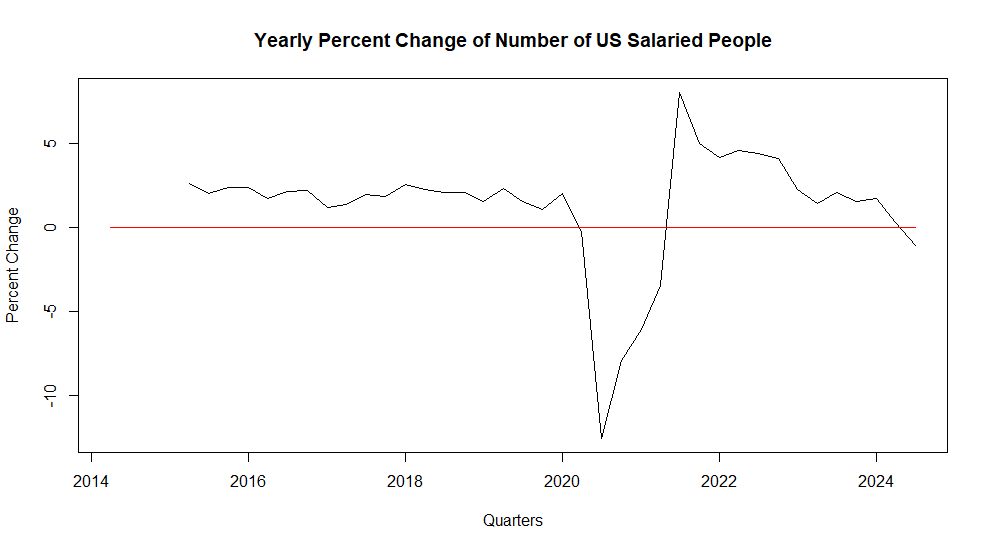
The number of salaried workers, which excludes self-employed, decreased to levels seen in the third quarter of 2022. The annual percent change registered a negative number (-1% on an annual basis) only seen in the early days of the pandemic. To put the data in context, the US labor market averaged 2.9% annual growth in the number of waged workers during the first quarter of 2015 to the fourth quarter of 2019, before the pandemic hit. In other words, it was expected for the rate to grow – despite the recent trend slowdown – as the population and labor force expanded. Therefore, a negative rate in the number of waged workers sends a worrisome signal for macroeconomics analysts. The data released today by the BLS not only show that the labor market has cooled down but also that it might be getting too cold for what might be needed for the US economy.
Wages grew moderately:
Median wages increased during 2022 and 2023, averaging 5.43 percent on a yearly basis. These increases were seen after the pandemic-induced economic slowdown and were part of the overall economic recovery. However, the pace at which employment grew during the same period led many analysts to worry about employment and wage growth as a main driver for inflation, fostering calls for restrictive monetary policy. Besides fiscal spending, consumption stemming from wage growth can trigger price increases, given that demand grows while supply catches up. Data released today by the US Bureau of Labor Statistics show wages grew slower at 3.59 percent change during the first two quarters of 2024 than the average 5.43 percent of previous years. This data contributes to the understanding that the labor market has already cooled down.

Make an Appointment


Categories: Macroeconomics, Policy


 Econometricus.co
1 reply »